
Where do you get your water?

As I write this, it’s been over two months since Hurricane Helene hit Western North Carolina. The storm triggered mass flooding, landslides, and high winds that destroyed or damaged thousands of trees. Hundreds of thousands of people lost power and water. The region’s most populous county just recently got access to potable tap water.
While recovery efforts are ongoing (and will be for a long time), the initial shock of the storm has faded for me. I’ve gotten used to seeing debris, though some of the worst spots still trigger that feeling of awe and terror that I felt in the storm’s immediate aftermath. Despite all the tragedy, and contrary to my own declaration that there is no returning to normal after a disaster of this magnitude, my family and I are back to many of our pre-storm routines. I’m working again, and many of the bars, restaurants, and coffee shops we frequent are open.
This uneasy equilibrium is weird and difficult to manage. Our house and most of the homes in our immediate line of sight were spared from severe flooding, but there’s still catastrophic damage and debris all over our town. I toggle between worlds every time I run an errand, and the transition in and out of disaster zones reminds me how tenuous and fragile life is. Our individual luxuries feel selfish and tainted by communal loss.
Losing access to drinking water was one of the most traumatic aspects of the storm for me. Western North Carolina is typically rainy and humid, and known for its abundant water. We take water for granted here, but Helene exposed the arrogance of that assumption. The network of dams, treatment plants, pipes, and pumps required to get water from its original location to our homes is complex, with many potential points of failure. The whole framework is vulnerable to extreme cold and heat, and as we now know, extreme flooding.
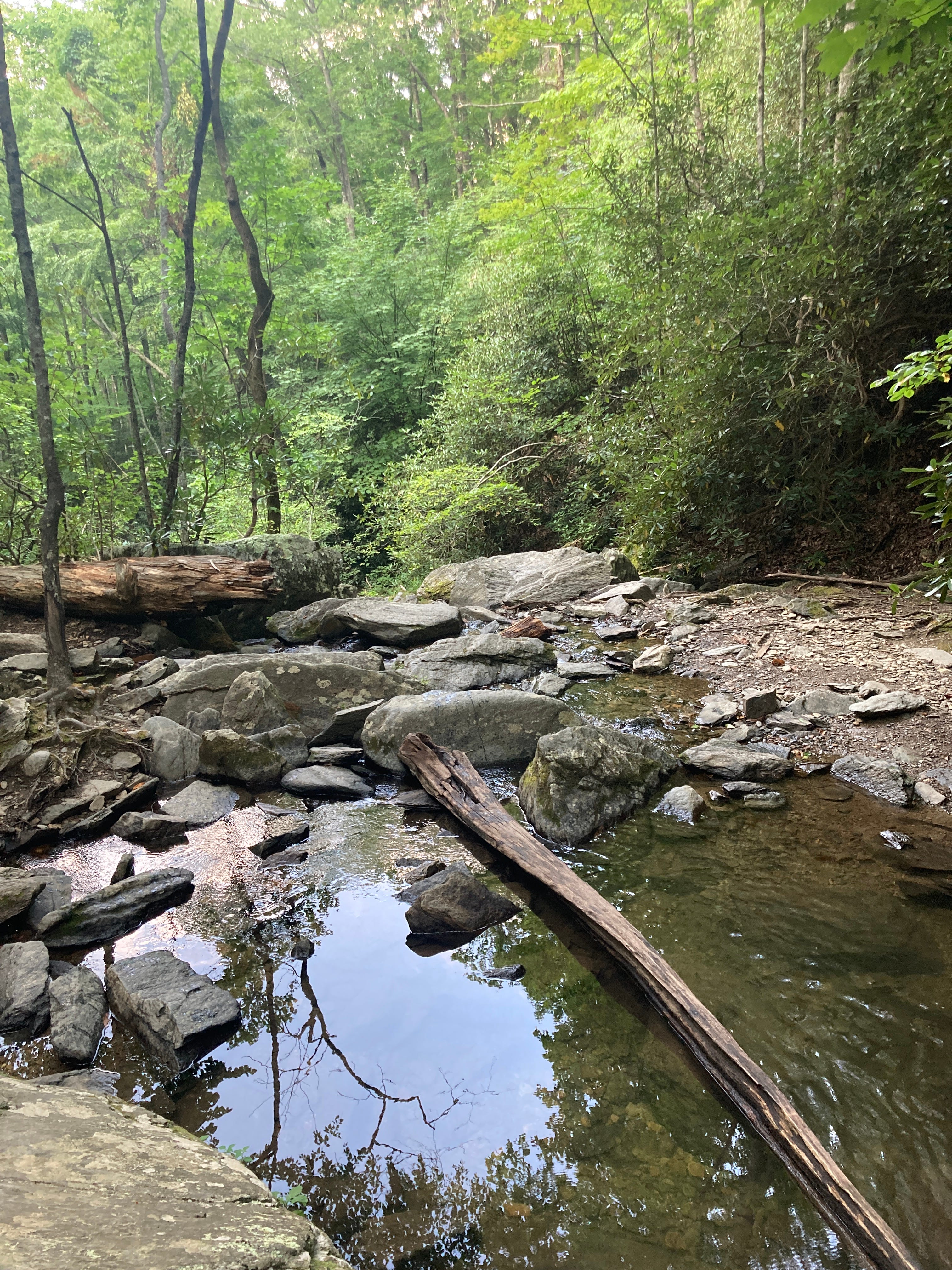
I've been thinking about our water since before the storm. Earlier this year, I bought a prompt journal with a collection of writing practices centered on ecological change. One of the sections asks the following questions about drinking water:
"Do you know where your water comes from? Does it come from a nearby spring? Or from another state? Another country? How is a changing climate impacting this flow of water from your source to your neighborhood?"
I live in a small town called Old Fort, where most residents access water via municipal or private wells that pull from an underground aquifer, one of many mundane miracles that I've ignored in my 34 years on earth. Our town sits right at the base of a mountain range created by the Brevard Fault, a space between tectonic plates that shoved the Appalachian Mountains up from the depths eons ago.

This upheaval left behind fractured underground spaces between rock from different eras with different geological characteristics. Water on the surface seeps through layers of clay, soil, and rock, slowly filtering contaminants until it comes to rest in these pockets above a less porous layer of bedrock. It sits there entombed, slowly seeping into underground springs or rising up via wells into our faucets, spigots, and shower heads.
The same geologic conditions that provide this area with clean drinking water turned it into a nightmare flood zone. The dramatic elevation changes created by the Brevard Fault funneled water into rivers and valleys during the storm. That water carried industrial chemicals, bacteria, pathogens, and other pollutants as it washed over our homes, towns, and cities, and it may carry them all the way down to those aquifers.
In developed nations, almost all of our essential resources are served up via complex networks like our water delivery systems. These networks provide steady, reliable access to goods or services in exchange for an equally consistent intake of money. We’ve adopted these systems because they break tasks that used to require lots of time and effort for individuals (and still do in many parts of the world) into aggregate processes that maximize efficiency and free us up to spend our time on something else.
Over time, we’ve outsourced our survival to these networks and the businesses or governments that can afford to build and run them. They’re creeping into other facets of life too; most of my media, finance, and social interactions are at least partially digitized or automated.
The moving parts that make up these delivery systems are almost completely hidden from most of the people who rely on them. As our worlds shrink into our phones, the infrastructure that streamlines our day-to-day activities gets bigger and more unwieldy. Author and journalist Kyle Chayka notes this irony in The Longing for Less, his book about minimalist art and lifestyle trends:
“The IPhone’s function depends on an enormous, complex, ugly superstructure of satellites and undersea cables that certainly aren’t designed in pristine whiteness. Minimalist design encourages us to forget everything a product relies on and imagine, in this example, that the internet consists of carefully shaped glass and steel alone.”
Whether it’s water from a tap or information on a screen, we’re able to ignore all this complexity as long as the things we pay for are served up with the same banal, predictable immediacy we’re used to. When something disrupts that flow, we’re shocked into the realization that we have dangerously little direct connection to the things we need to survive. Helene disrupted that flow in a way I’d never experienced. It wasn’t just water; we lost access to fuel, cell service, Wi-Fi, electricity, gas, grocery stores, etc. All we had was the immediate resources in our home, and our neighbors.
It’s almost cliche at this point to talk about how natural disasters bring people together by forcing neighbors who don’t normally interact to talk to each other (Rebecca Solnit’s A Paradise Built in Hell is probably the seminal text on this subject, though I’m sure there are others). I’ve heard countless versions of “I never talked to my neighbors before this” from my own friends, and it’s true for me too. An elderly woman who lives across the street stayed in our living room for a few hours when it looked like the river might reach her house. My wife and I had both talked with her before, but the idea of her coming over (or vice versa) was way beyond the existing boundaries of our relationship.
I think “Who are your neighbors?” and “Where does your water come from?” are related questions. If you don’t know the answer to one, you probably don’t know the other either. Both feel unnecessary in a world where most of our needs are met through a combination of digital infrastructure and anonymous, poorly paid gig workers, but they could be the difference between life and death if a disaster comes to your town. As artist Jenny Odell says her book How to do Nothing:
“Let’s not forget that, in a time of increasing climate-related events, those who help you will likely not be your Twitter followers; they will be your neighbors.”
I can’t say that I know all my neighbors yet, but I know, trust, and care for some of them a little more than I did before after sharing gas, water, information, and sympathy. I know the local shops and businesses will use every dollar I spend on water and supplies for the community if this happens again. If the reservoir in the neighboring county gets contaminated, I’ll know my well water is safe and fill a few tanks up for my friends up the mountain.
What I don’t know is if these lessons will really stick, for me or for anyone else. Once the tap comes back on, it’s hard to remember the three days you spent flushing toilets with a bucket. Western North Carolina is uniquely equipped with non profits and other organizations that are really good at mutual aid and environmental awareness, but it’s difficult to think about what’s happening behind the scenes when there’s no disruption to break the spell and demand we take a closer look.
There will be more disruptions, here and everywhere. Convenience culture, corporate greed, and privatization are wreaking havoc on the hidden stuff that makes technologically advanced societies function, and on the ecological systems that we all rely on to survive. We need to know where our water comes from so that we can make choices to ensure that it stays drinkable. We need to know who our neighbors are so we don’t face the next disaster alone. We need a new normal.